

Maximizing ROI in Plastics Extrusion: The Critical Role of High-Performance Wire Mesh
In the high-stakes world of plastics extrusion, the difference between a profitable shift and a costly shutdown often rests on a single component: the extruder screen. Whether you are a plastic extrusion company processing recycled polymers or an OEM manufacturing high-speed extrusion machinery, the precision and durability of your wire mesh are non-negotiable for operational success.
The True Cost of “Low-Cost” Filtration
For many production managers, filtration is seen as a consumable expense. However, the economic reality is far more complex. Unplanned downtime in a continuous extrusion line can cost manufacturers thousands of dollars per hour in lost productivity, labor, and potential parts damage.
High-quality filtration systems from a reputable vendor provide a measurable ROI by:
- Reducing Scrap Rates: Precise mesh prevents un-melted gels and contaminants from reaching the die, lowering rework rates and significantly cutting material waste.
- Protecting Capital Equipment: Screens act as a barrier for abrasive foreign particles, preventing wear on expensive screws, barrels, and breaker plates.
- Optimizing Energy Usage: Clogged or low-quality screens cause erratic back-pressure, forcing motors to work harder and increasing energy consumption.
- Ensuring Product Purity: In industries like pharmaceuticals or food-grade plastics, superior mesh is mandatory to avoid metallic contamination.
Engineering for Pressure: Multi-Layer Screens and Spin Packs
Modern extrusion machines operate under extreme thermal and mechanical stress, often handling molten polymers at temperatures up to 800°C. Standard single-layer mesh may “blow through” or distort under these conditions.
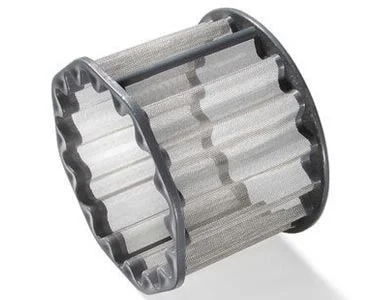
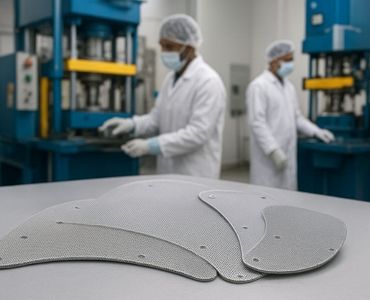
Multi-layer screen packs—specifically those that are spot-welded—provide a graduated filtration process. By placing a coarse mesh against the breaker plate to support finer inner layers, these packs maintain structural integrity even at high differential pressures. For specialized applications like synthetic fiber production, Spin Packs are critical. These use ultra-fine weaves (down to 5 microns) to ensure a perfectly homogenous melt, preventing filament breaks in spinnerets.
Technical Comparison: SS304 vs. SS316L
Choosing the correct material is vital for durability. While SS304 is the standard for mild environments, SS316L is the superior choice for high-temperature and chemically aggressive processes.
| Feature | SS304 / 304L | SS316 / 316L |
|---|---|---|
| Key Ingredient | 18% Chromium, 8% Nickel | Adds 2-3% Molybdenum, 3-4% Nickel |
| Max Temperature | Approx. 800°C | Up to 1000°C |
| Corrosion Resistance | Good for general use | Superior (esp. against chlorides/salts) |
| Weldability | High (L-grade preferred) | Excellent (L-grade reduces carbide precipitation) |
| Best For | Standard water/mild acid filtration | Harsh chemicals, recycled plastics, marine air |
Partner with Stanmesh: Your Global Filtration Expert
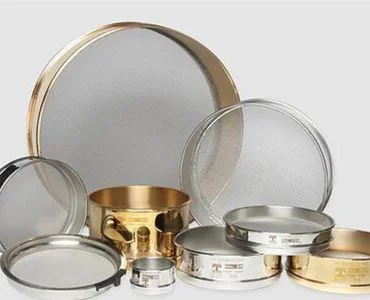
At Stanmesh, we don’t just supply mesh; we partner with you to engineer the “correct type” of filtration for your specific polymer and machine specs. From standard circular wire mesh discs to complex custom extruder screen packs, our solutions are designed to eliminate contaminants and maximize your machine’s uptime.